
Beyond Boundaries Lecture Series 18 | Dr. Milen JISSOV’s OBTL&CRA lecture explores BNBU’s teaching philosophy and practice
On 14 October, Dr. Milen JISSOV, Associate Director of the Centre for Teaching and Learning (CTL) and Associate Professor of the Faculty of Humanities and Social Sciences (FHSS), delivered a Beyond Boundaries lecture titled "OBTL & CRA: BNBU's Teaching Philosophy and Practice."
Introduced at BNBU in September 2013, Outcomes-Based Teaching and Learning (OBTL) and Criterion-Referenced Assessment (CRA) have since become the University's "acquired pedagogical DNA." The lecture aimed to familiarize colleagues with these pedagogical approaches and address practical questions about student assessment, course design, and syllabus writing.
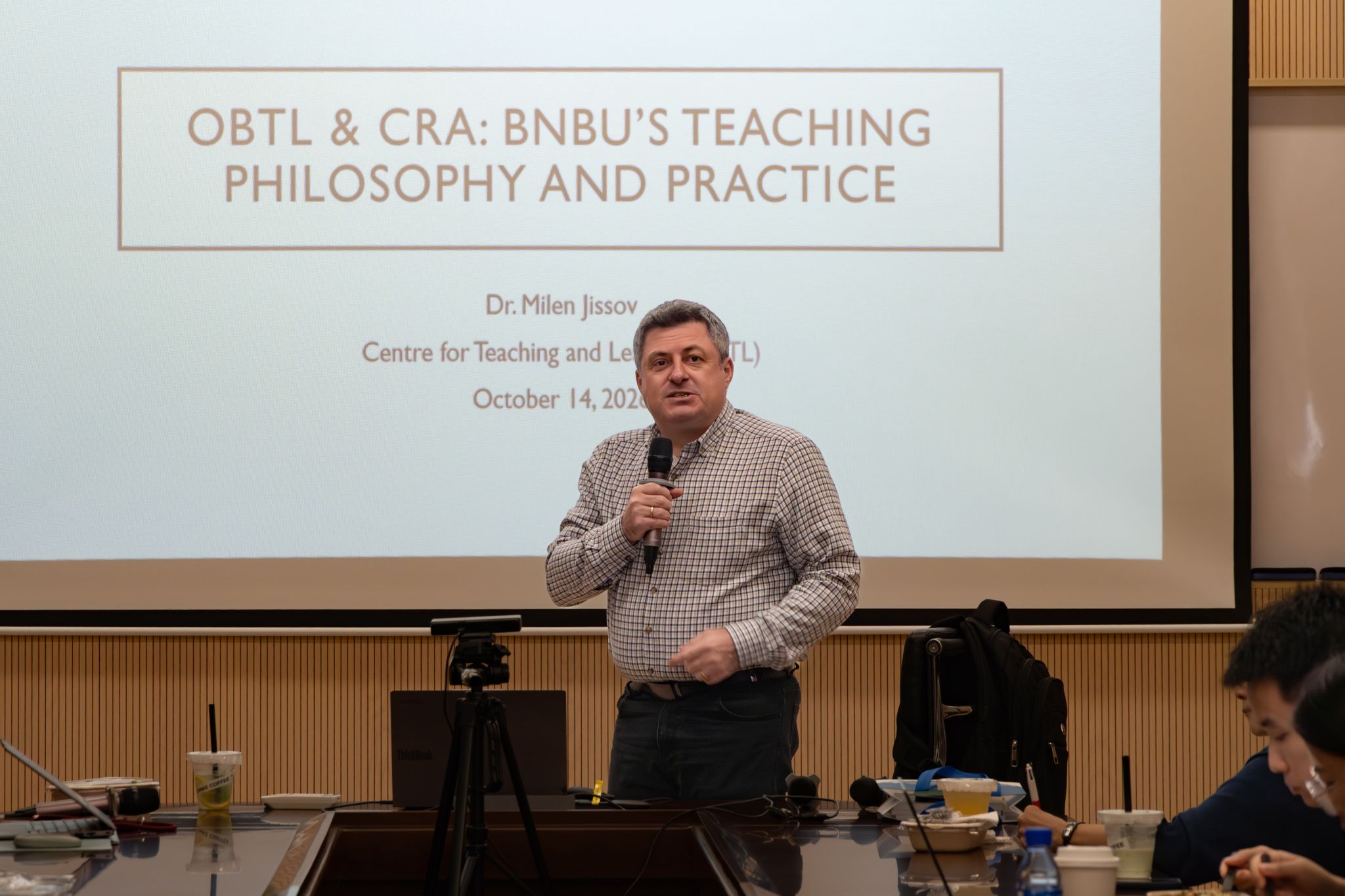

Key Concepts in OBTL & CRA
Dr. JISSOV first outlined BNBU's undergraduate curriculum, which requires students to complete a total of 148–155 units. This includes: Major Courses (63–79 units), University Core (UC) Courses (37 units), General Education (GE) Courses (18 units), and Free Elective (FE) Courses (15–30 units).
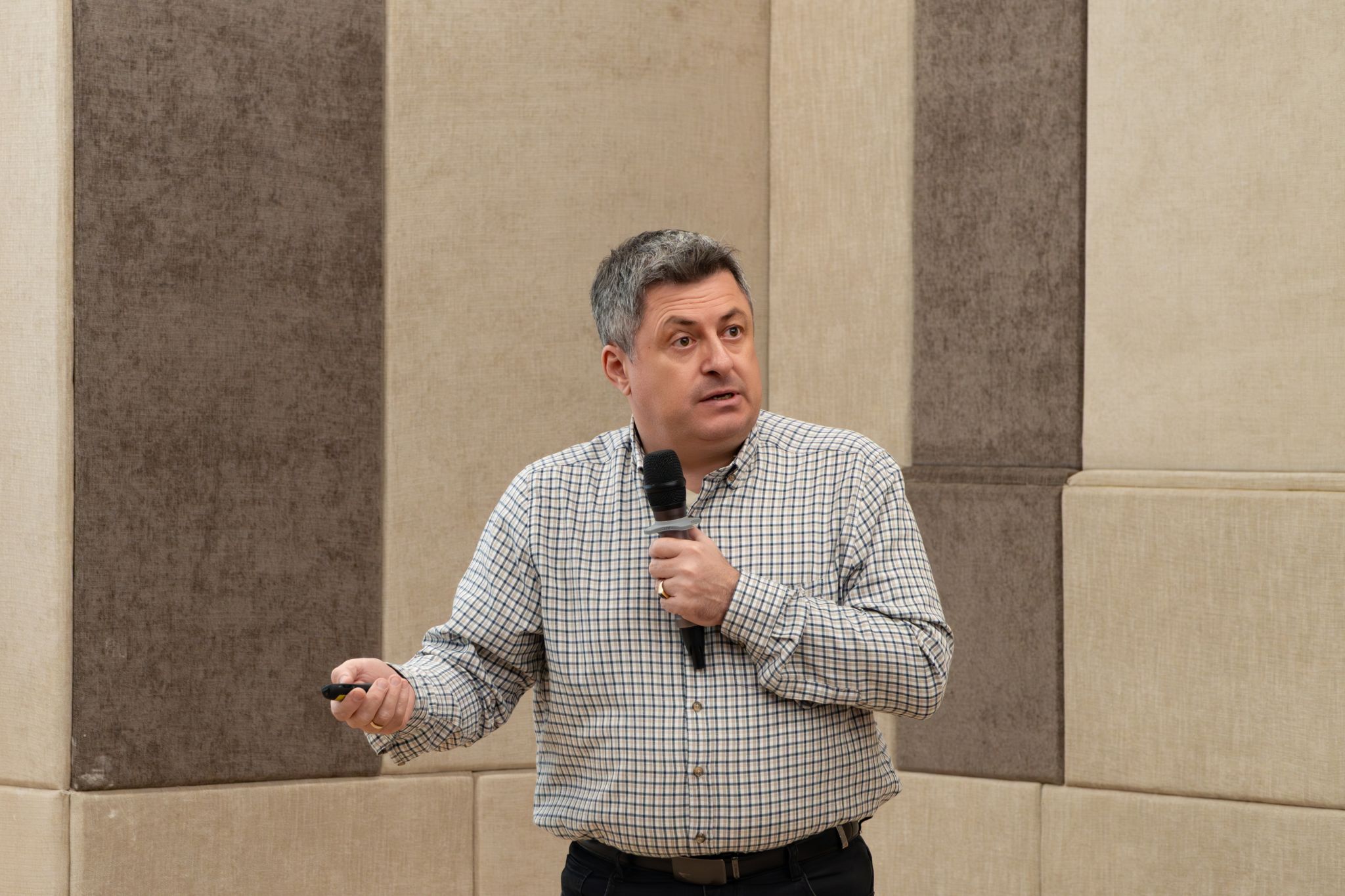
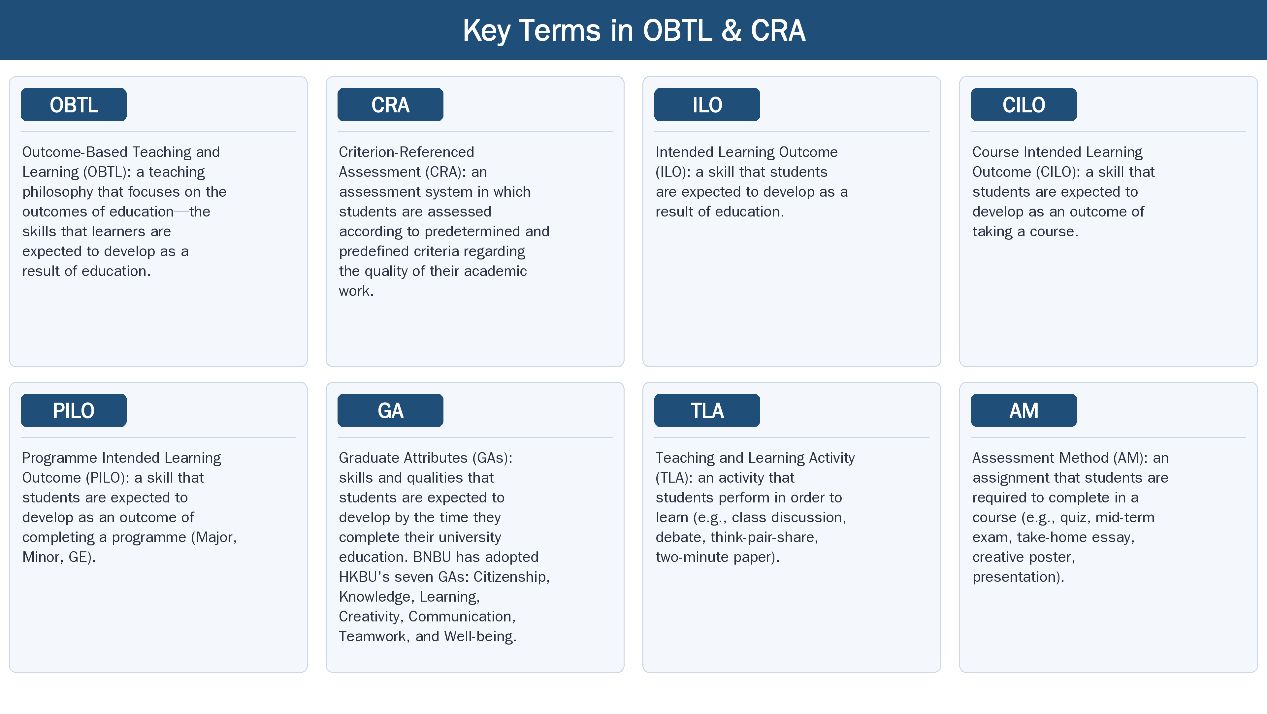
He then explained the core concepts of OBTL and CRA. OBTL is a teaching philosophy that focuses on educational outcomes—the skills that learners are expected to develop through their learning. CRA is the assessment system adopted at BNBU, in which students are assessed according to predefined criteria regarding the quality of their academic work.
Constructive Alignment and Practical Strategies for Course Design
Dr. JISSOV explained the principle of "constructive alignment". Under OBTL, a course needs to have clearly defined TLAs, AMs, and CILOs. The TLAs and AMs should be designed to help students develop the skills defined in the CILOs. These CILOs, in turn, need to be aligned with the PILOs of the programme to which the course belongs, and the PILOs need to be aligned with BNBU's GAs. Dr. JISSOV drew on his extensive teaching experience to showcase how he applies OBTL principles in his own course design.

Participant taking notes
Dr. JISSOV also shared practical strategies for course design and syllabus writing. He recommended defining CILOs using "action verbs", such as describe, explain, apply, analyze, assess, and create, with only one action verb per CILO. He further advised limiting each course to no more than five CILOs, with three or four being ideal, and aligning each CILO with no more than three PILOs.
Teaching and Learning Activities (TLAs) and Assessment Methods (AMs)
Dr. JISSOV encouraged faculty to incorporate multiple and diverse TLAs into their courses, noting that lectures alone are no longer considered a highly effective approach to learning. He introduced two AM categories: formative and summative. Formative assessment is designed to support learning by providing students with feedback they can learn from, while summative assessment evaluates students’ overall performance. He stressed that assessment methods should be weighted in a balanced manner and that feedback should be returned within a reasonable timeframe, as both practices are vital to supporting student learning.
In the Q&A session, the audience exchanged ideas with Dr. JISSOV about course design, assessment rubrics, and the integration of AI into teaching. Dr. JISSOV underscored the importance of student-centred teaching, highlighting how the OBTL philosophy should inform every aspect of course design and assessment.

Q&A Session
Launched in 2025, "Beyond Boundaries" Lecture Series brings together leading scholars and educators to encourage transdisciplinary exchange, and CTL pledges to continue supporting the BNBU Teaching and Learning community through this transition.
Last Updated: October 19, 2026