
Beyond Boundaries Lecture Series 17 | Dr. Barry BAI’s lecture explores teaching strategies to foster learner autonomy in English-medium classes
On 21 September, Dr. Barry BAI, Tenured Associate Professor in the Department of Curriculum and Instruction at The Chinese University of Hong Kong, has delivered a lecture on how teachers can help students become more motivated and self-directed learners in English-medium classrooms.
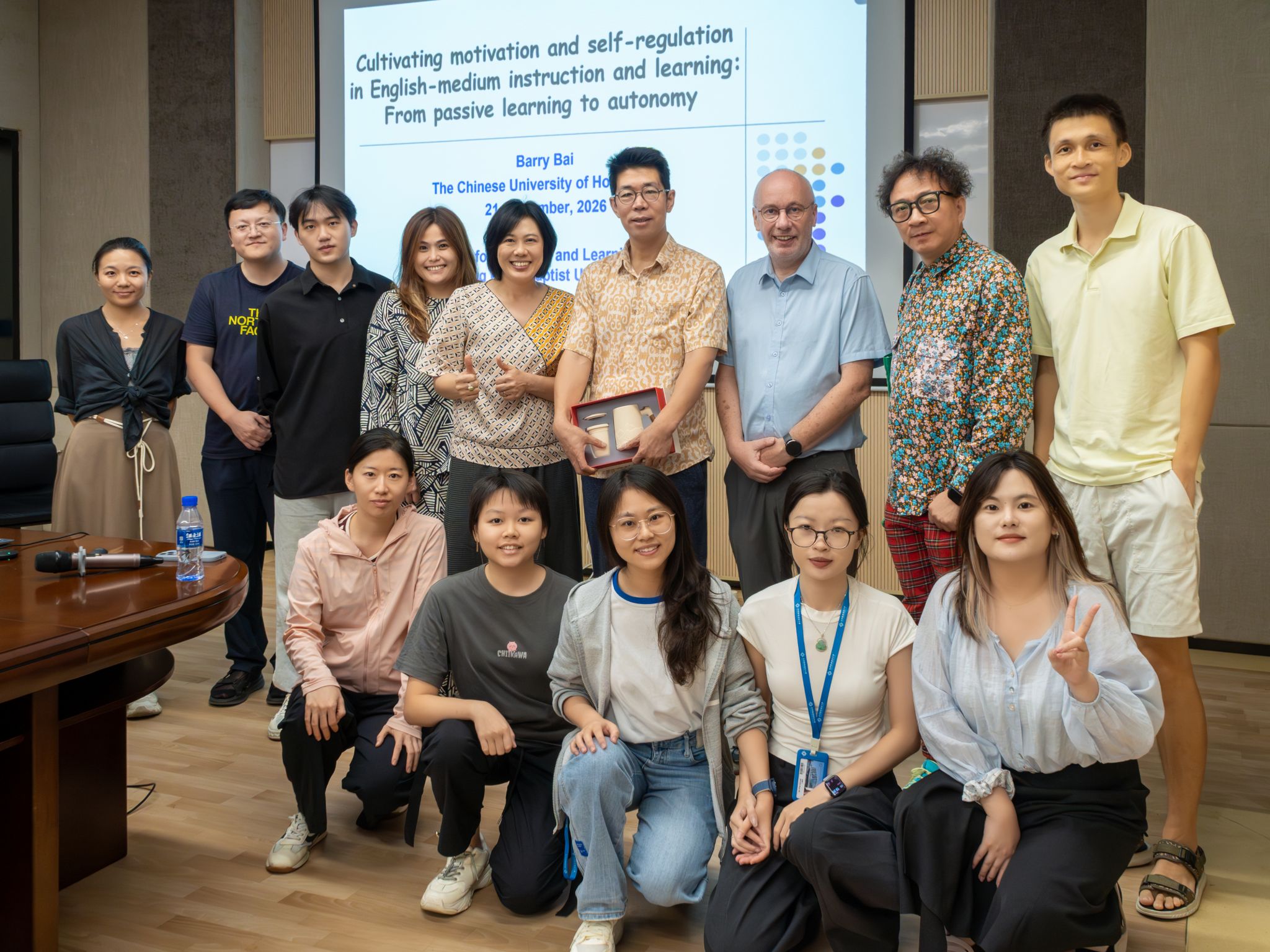
CTL Honours Dr. BAI with a BNBU Gift
Key Motivational Factors in Learner Autonomy
In his lecture titled “Cultivating Motivation and Self-regulation in English-medium Instruction and Learning: From Passive Learning to Autonomy,” Dr. BAI started by inviting the audience to share the common challenges in their classes.
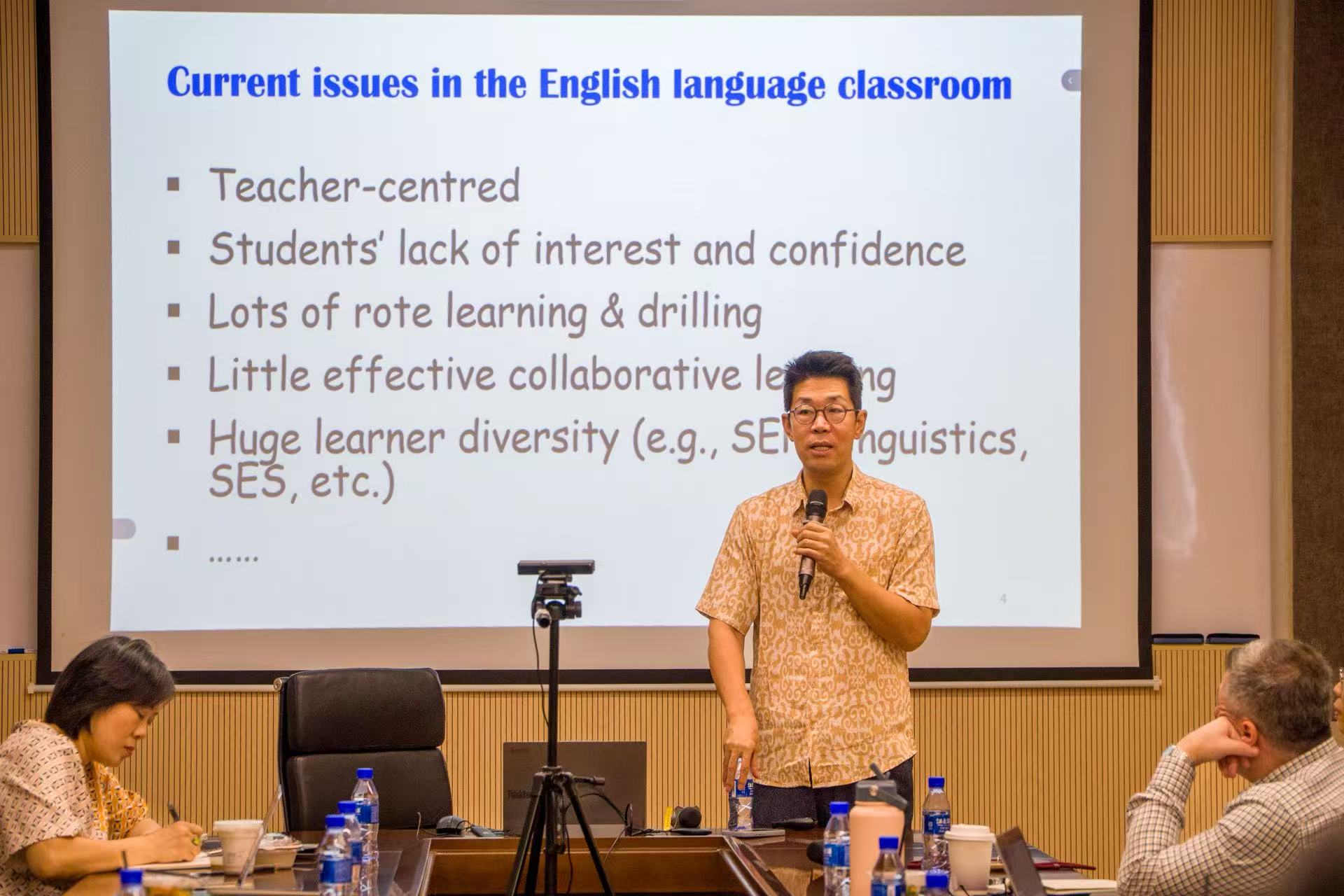
Dr. BAI invites the audience to share their classroom challenges
He then identified three motivation factors that predict the learner autonomy: self-efficacy, or confidence; a growth mindset, the belief that effort leads to improvement; and intrinsic motivation, such as interest and curiosity.
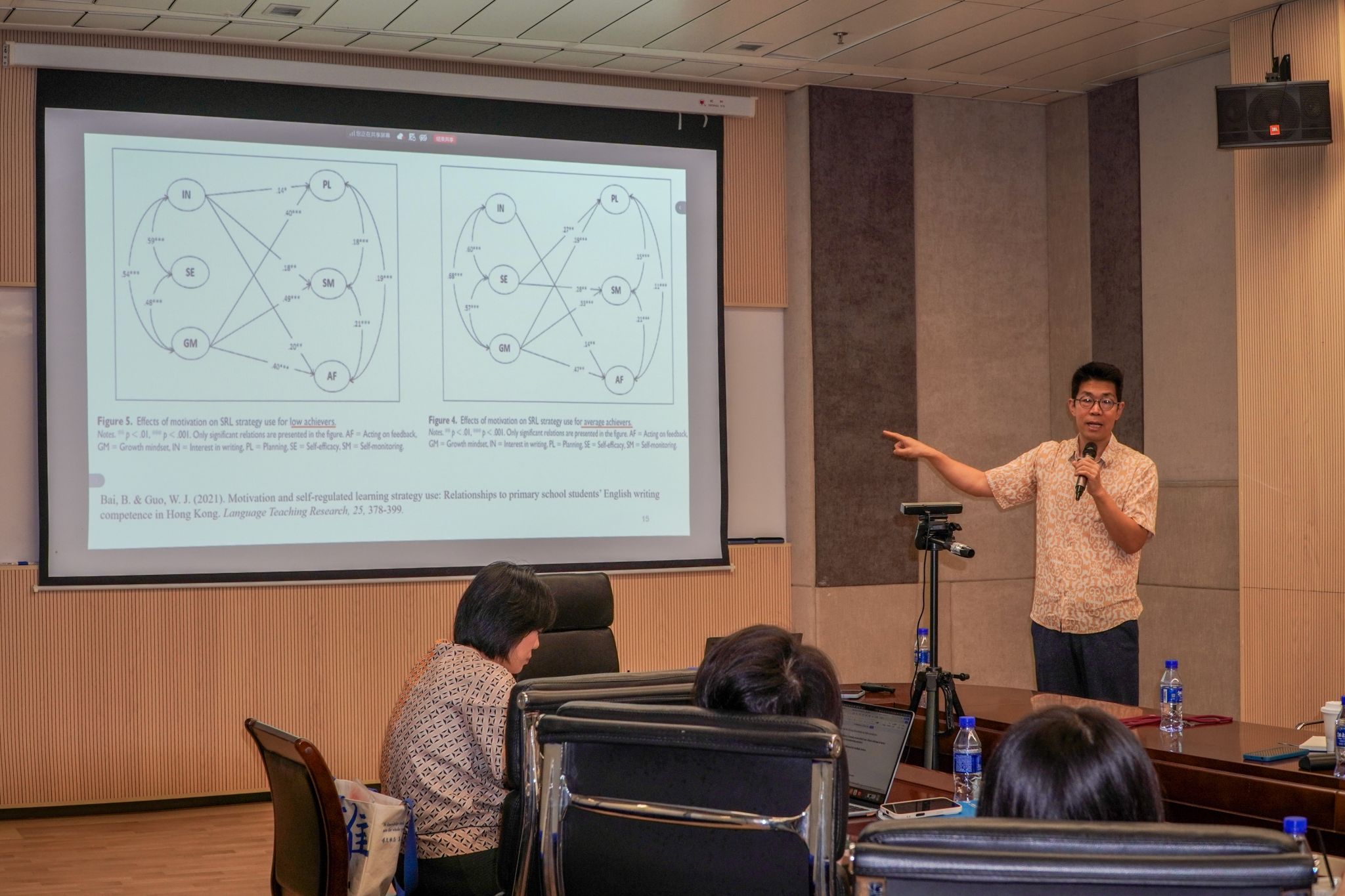
Dr. BAI shares his reesearch findings
His research finds that the motivation factors matter differently depending on students' level of achievement. For example, among low achievers, growth mindset and intrinsic motivation are more relevant in predicting how active students are in class; while among high achievers, growth mindset is the most important predictor.
Teaching Strategies to boost learner autonomy
Dr. BAI pointed out that teachers can boost students’ motivation through four types of support: informational, instrumental, emotional and appraisal. Drawing on the self-regulated learning (SRL) model developed by Zimmerman (2000) , Dr. BAI shared practical classroom strategies, including helping students set their own goals and relating teacher feedback to their learning motivation. He also introduced “Six Thinking Hats” as a guideline to direct students thinking in class.
The session was delivered in a highly interactive manner, with faculty members and students sharing observations from their own teaching and learning experiences.

Q&A Sessions
Dr. BAI’s research focuses on motivation, self-regulated learning, and social and emotional learning. He has led large-scale projects connecting research with classroom practice across Hong Kong schools, and his publications have been recognised as Clarivate Highly Cited Papers. He is listed among the world's top 2% most-cited researchers in languages and linguistics.
Last Updated: September 21, 2026